OverviewServicesTechnologyKnowledgeAboutNewsContactCustomer Login
Knowledge

Why premium animal fibers are difficult to test.

Textiles made from premium animal fibers are frequently counterfeited — repeatedly and often without being detected.

Cashmere and natural fibers
Problem

Mislabeled natural fibers are a real risk for brands, retailers and consumers.

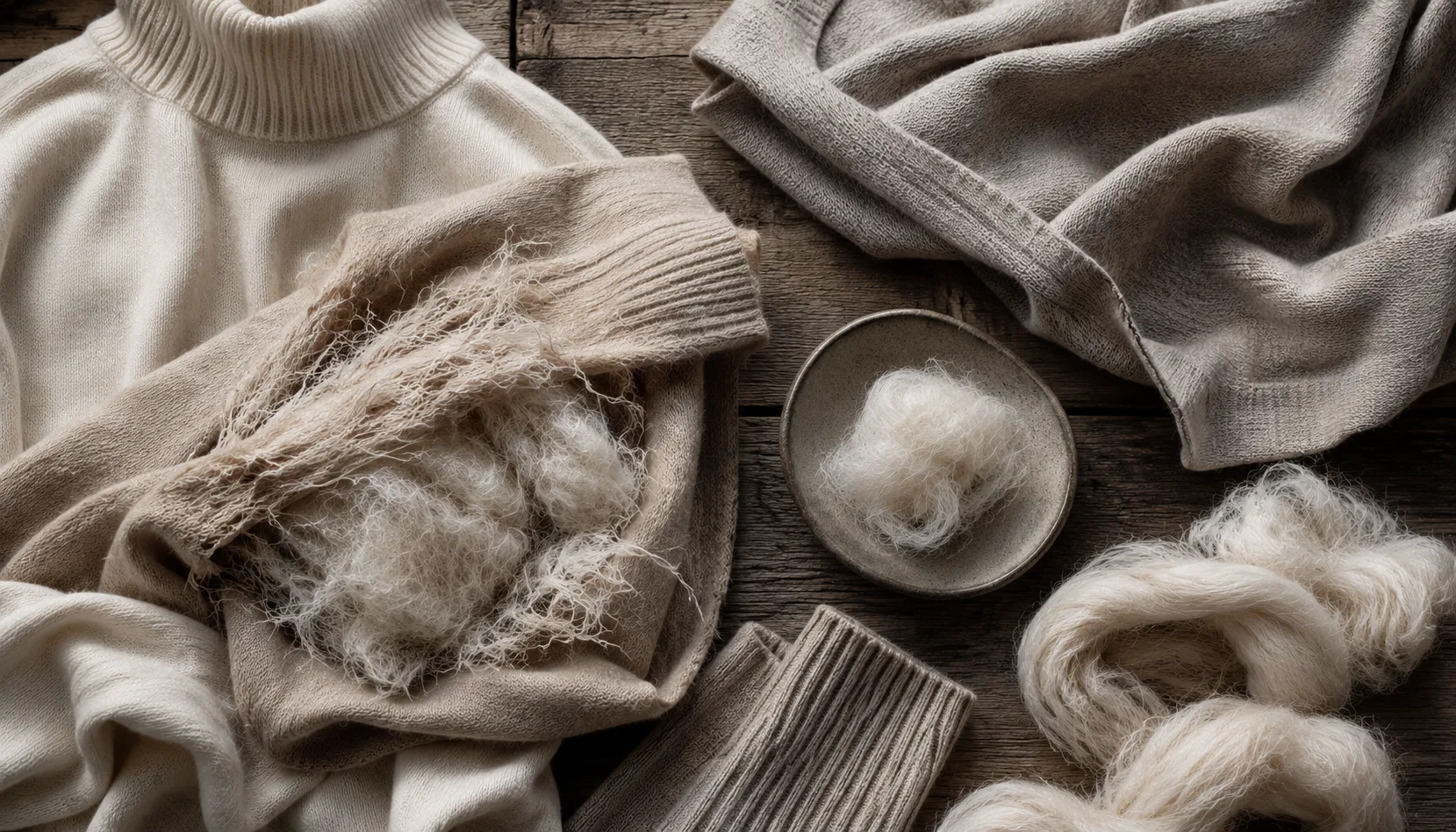
Especially for high-value fibers such as cashmere, the economic incentive for mislabeling is significant. In several cases, products advertised as “100% Cashmere” were reported by the Cashmere and Camel Hair Manufacturers Institute not to be cashmere, but acrylic, polyester or other synthetic materials.

At the same time, EU textile labeling regulation requires fiber composition to be clearly declared. Terms such as “100%”, “pure” or “all” may only be used for products consisting exclusively of the same fiber.

Reliable verification remains demanding: classical microscopic methods such as light microscopy or SEM require experienced experts to evaluate individual fibers — a slow and error-prone process, especially for morphologically similar animal fibers.

HairSense addresses exactly this point: AI-assisted fiber analysis for more objective, faster and scalable testing processes along the textile value chain.

Media examples on cashmere mislabeling and counterfeiting risks
Sources for the media examples shown: Deutschlandfunk Nova (2018) · WELT (2020) · SZ Magazin (2015) · Augsburger Allgemeine (2017) · SZ / dpa (2017) · The Scotsman (2021)
The shown excerpts are cited press examples; rights to the respective articles, images, and brands remain with their respective rights holders.
Manual testing process

The bottleneck lies in the combination of individual fibers, image quality and expert judgement.

For morphological testing, individual fibers must be isolated from the sample, prepared, imaged under the microscope and evaluated based on subtle surface features.

Many individual fibers

Quantitative statements are not based on a single image, but on the evaluation of many separate fibers.

Subtle features

Scale edges, transitions and surface structures can look very similar across animal species.

Limited scalability

A purely manual process is difficult to scale for incoming goods, supplier release and serial quality control.
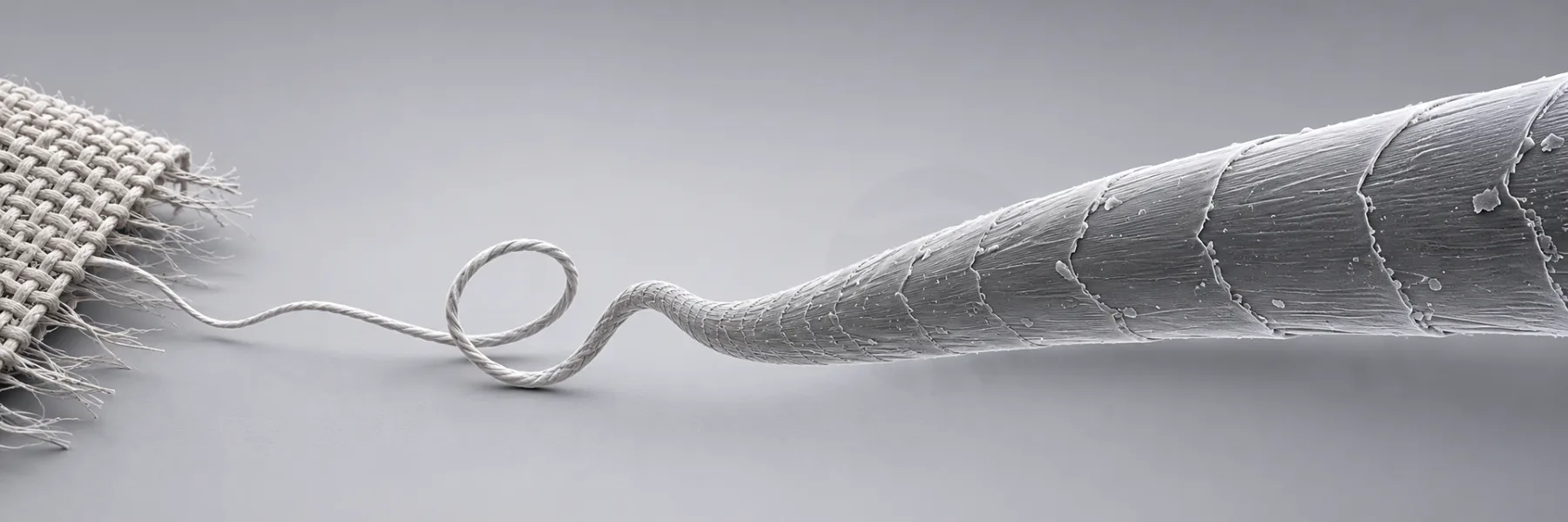
From sample to individual fiber

Textiles, yarns and raw fibers are first converted into individual fibers.

For morphological testing, fibers are first isolated from the textile, yarn or raw-fiber sample. Individual fibers are then imaged under the microscope and evaluated based on characteristic surface features. This enables comparison of scale pattern, scale density, scale height and further distinguishing features.

Process from textile sample to isolated individual fiber
Fiber features

The distinction lies in the combination of details.

Reliable differentiation of premium animal fibres comes from the combined pattern of measurable surface and structural features.

The distinction is not based on a single measurement, but on the combination of multiple features. As rough reference values, cashmere fibres are often in the range of about 12–19 µm, yak fibres around 16–22 µm, and wool or fine wool across a broader range of about 19–40 µm. These values must always be interpreted together with the surface structure.

Testing becomes especially challenging for industrially processed materials: chemical and mechanical treatments can make lower-value fibres appear visually and morphologically closer to premium fibres. HairSense therefore combines many measurable parameters and evaluates them reproducibly across a larger number of individual fibres.

Reference values: IWTO-58 / Round Trials · Phan & Wortmann
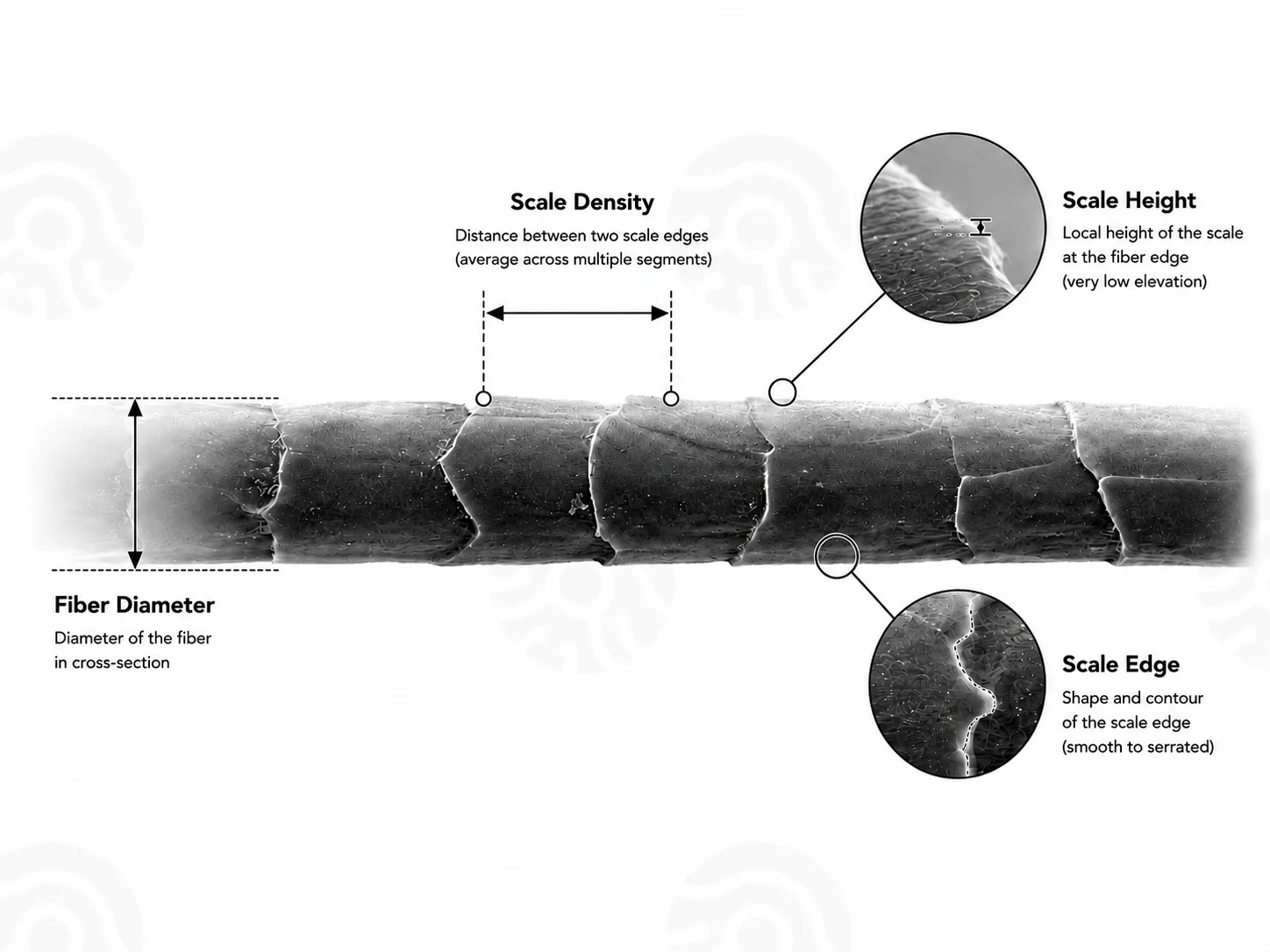
Process from textile sample to isolated single fibre
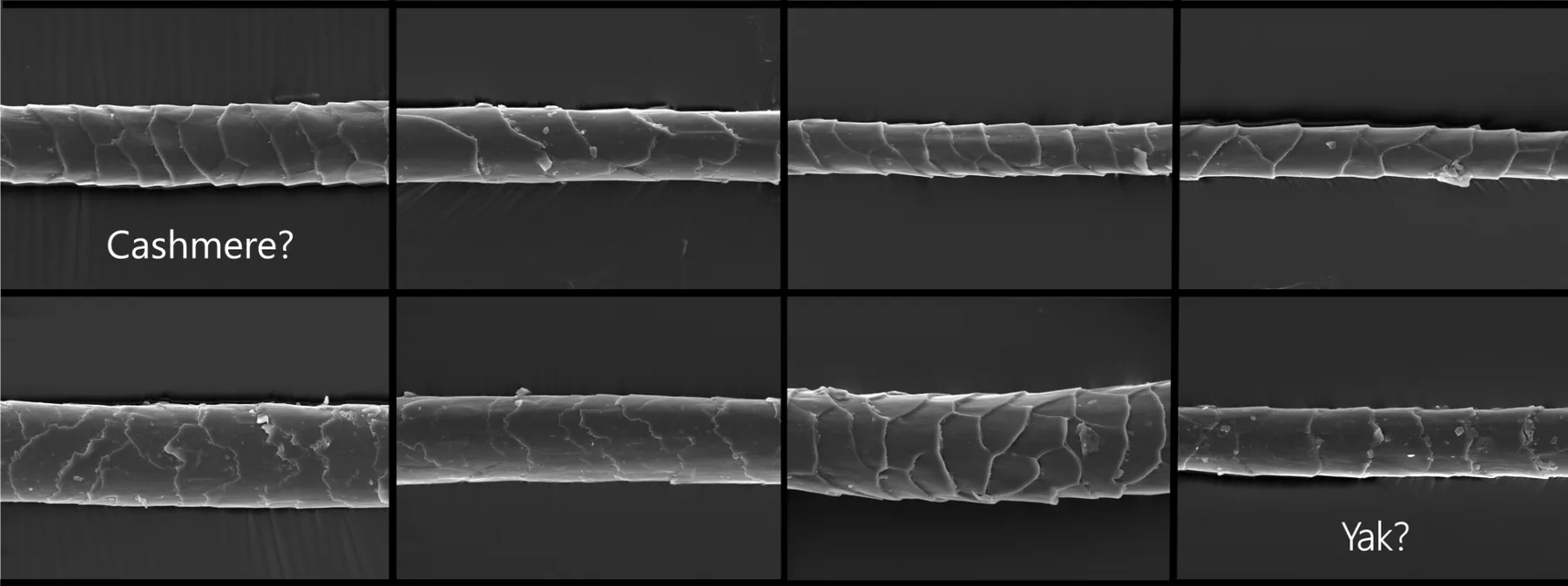
SEM comparison of cashmere and yak

The challenge is not only distinguishing fibers, but reproducibly imaging and evaluating many individual fibers.

Method comparison

Why DNA and protein tests do not solve the problem alone.

Molecular methods are scientifically valuable. For fast, robust and scalable textile testing, however, they remain limited — especially for processed, dyed or blended fibers.

Microscopy

LM / SEM · IWTO-58 · ISO 17751-1/2

  • direct evaluation of the fiber surface
  • applicable to loose fibers, intermediate products and finished goods
  • bottleneck: manual image acquisition and expert evaluation
DNA

DNA barcoding / PCR · ISO 18074

  • DNA in hair fibers is limited and often degraded by processing
  • dyeing, bleaching, heat and washing make robust analysis difficult
  • more suitable as a complementary species-identification method than fast routine quantification
Proteomics

LC-MS/MS · marker peptides · keratin

  • powerful when specific peptide markers are available
  • requires extraction, digestion, mass spectrometry and reference data
  • complex workflow, harder to transfer into fast incoming-goods control
Further sources

Standards, regulation and scientific context.

Standard

IWTO-58

Reference method for microscopic differentiation of wool and specialty fibers.

IWTO →
Standard

ISO 17751-1 / 17751-2

Light microscopy and scanning electron microscopy for quantitative analysis of cashmere, wool and specialty animal fibers.

ISO →
Regulation

EU 1007/2011

Regulatory framework for fiber names and textile labeling in the EU.

EUR-Lex →
USA

FTC Cashmere Guide

Guidance on cashmere claims and the Wool Products Labeling Act.

FTC →
Proteomics

LC-MS/MS marker peptides

Scientific approach to differentiating cashmere, wool and yak via keratin peptides.

Paper →